Hanafuda · a quick guide
Koi-Koi in the Yakuza games: what to collect, when to stop
Koi-Koi turns up in the gambling halls of the Yakuza and Like a Dragon games, and the help screen assumes you already know hanafuda. You don't need to. This is the short version: what you are doing each turn, the sets that score fastest, how to block, and when to stop. It is written by the makers of Koi-Koi for iPhone and iPad, not by the makers of the series, and it isn't connected to them. The rules screen in your game has the final word on its point values.
What you're doing each turn
The deck has 48 cards: four for each month, and each month has its own plant. You play a card from your hand onto a card of the same month on the table and take both. Then a card is turned from the deck and does the same. If nothing matches, the card stays on the table.
So learn the plants, not the pictures. The ones people mix up: April's wisteria hangs down, July's bush clover has small red flowers; August is the grey pampas hill (with the Moon or the geese); November is the willow with the man and his umbrella, the swallow or the lightning.
Collect these first
- The sake cup (September). With the Full Moon it makes Moon Viewing, 5 points; with the Curtain, Flower Viewing, 5 points; and it counts as an animal. If you can take it, you usually should.
- The three-card sets worth 5: Boar-Deer-Butterfly, the three red ribbons with writing, and the three blue ribbons. Once you hold two of a set, the third card is worth more than almost anything else on the table.
- Brights: any three of the Crane, Curtain, Moon and Phoenix is 5 points. The Rain-man (November, the man with the umbrella) is the weakest bright: with two others he scores nothing.
- Leave the chaff for later. Ten plain cards score 1 point. They pile up on their own.
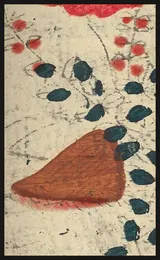
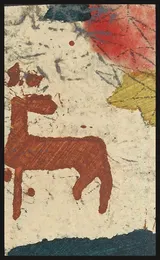
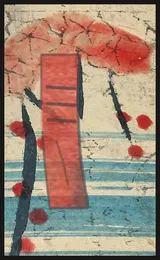
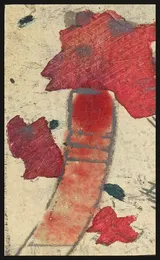
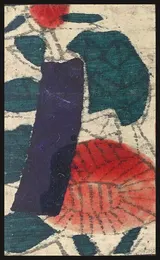
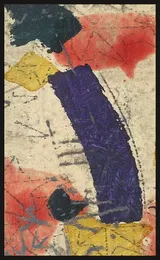
The full list with every card is on the Koi-Koi yaku list.
Block the other player
Look at what your opponent has captured as often as you look at your hand. If they hold two cards of a three-card set, the third card matters more than your own plans:
- If it is on the table and you can match it, take it, even if it scores you nothing.
- If it is in your hand, keep it there. A card you play that doesn't match stays on the table, where they can take it.
- Don't leave a card on the table that matches something they need.
When to stop, and when to call koi-koi
When you make a set, the game asks whether to stop or call koi-koi. Stopping ends the round and you score. Koi-koi plays on for more, but if the other player completes a set and stops first, you score nothing for the round.
- Stop by default. A sure 5 now beats a hoped-for 10 that can be wiped out.
- Call koi-koi only when your next set is nearly certain (the card you need is on the table and you hold its match), the other player's pile is nowhere near a set, and there are several turns left.
- Never call when they hold two cards of any three-card set, four animals or ribbons, or nine chaff. They are one card from stopping you at zero.
- Many tables double a total of 7 or more. If you are on 5 or 6 with an easy point coming, one koi-koi to cross 7 can pay. Check whether your game doubles.
Practise somewhere quieter
The quickest way to get good is to play a lot of hands with help switched on until you know the months by sight. Koi-Koi for iPhone and iPad lights up the cards that match, marks each card's month in its corner, and coaches your first hand. The yaku guide is one tap away. It's the same game, played with a hand-stencilled deck from around 1870.
Questions
Is Koi-Koi in the Yakuza games the same as real Koi-Koi?
It is the same game with the same 48-card hanafuda deck: match cards by month, build scoring sets, then stop or call koi-koi. Point values and extra rules differ between tables, so the rules screen in your game is the final word.
What is the fastest way to score in Koi-Koi?
Go for a three-card set worth 5 points: Boar-Deer-Butterfly, the three red ribbons with writing, or the three blue ribbons, or pair the sake cup with the Moon or the Curtain. Chaff, animals and ribbons need five or ten cards for 1 point.
Should I always call koi-koi?
No. If the other player finishes a set and stops after you call, you get nothing for the round. Call it only when your next set is nearly certain and their pile is nowhere near one.
Who is the man with the umbrella?
The November Rain-man, one of the five brights. He is usually said to be the calligrapher Ono no Michikaze, who watched a frog keep leaping for a willow branch until it made it. He is the weakest bright: with two other brights he scores nothing.