Hanafuda · 화투 · the deck
Hwatu vs hanafuda: one deck, two countries
Hanafuda (花札, “flower cards”) is the Japanese name; hwatu (화투, 花鬪, “flower battle”) is the Korean one. They are the same deck: 48 cards, four for each month, each month marked by a plant. Hanafuda reached Korea from Japan around the turn of the 20th century and became the country's favourite card game. What differs is the feel of the cards, a few printed marks, the order of the last two months, and the games people play with them.
At a glance
| Hanafuda (Japan) | Hwatu (Korea) | |
|---|---|---|
| Name | 花札 hanafuda, “flower cards” | 화투 hwatu, “flower battle” |
| Cards | 48: 12 months × 4 | 48: 12 months × 4, and many packs add bonus cards |
| Feel | Small, thick and stiff | Small, thin plastic |
| Backs | Usually black or red | Usually red |
| Bright cards | No extra mark | Marked 光 (bright) in a corner circle |
| Double cards | None | Some plain cards marked as double pi (쌍피) |
| Months 11 and 12 | 11 willow (rain), 12 paulownia | 11 paulownia (오동), 12 rain (비) |
| Card groups | hikari, tane, tanzaku, kasu | gwang, yeolkkeut, tti, pi |
| Best-known games | Koi-Koi, Hana-awase, Hachi-Hachi | Go-Stop, Matgo, Seotda |
Packs vary by maker in both countries. These are the usual differences, not rules every deck follows.
The same cards under two names
Every month has a Japanese name and a Korean nickname. Some Korean names describe the picture differently: April's wisteria is “black bush clover” and May's iris is “orchid”.
| Plant | Japan | Korea |
|---|---|---|
| Pine | 1 · 松 matsu | 1 · 송학 songhak (pine and crane) |
| Plum | 2 · 梅 ume | 2 · 매조 maejo (plum and bird) |
| Cherry | 3 · 桜 sakura | 3 · 벚꽃 beotkkot |
| Wisteria | 4 · 藤 fuji | 4 · 흑싸리 heukssari (black bush clover) |
| Iris | 5 · 菖蒲 ayame | 5 · 난초 nancho (orchid) |
| Peony | 6 · 牡丹 botan | 6 · 모란 moran |
| Bush clover | 7 · 萩 hagi | 7 · 홍싸리 hongssari (red bush clover) |
| Pampas grass | 8 · 芒 susuki | 8 · 공산 gongsan (empty mountain) |
| Chrysanthemum | 9 · 菊 kiku | 9 · 국화 gukhwa |
| Maple | 10 · 紅葉 momiji | 10 · 단풍 danpung |
| Willow (rain) | 11 · 柳 yanagi | 12 · 비 bi (rain) |
| Paulownia | 12 · 桐 kiri | 11 · 오동 odong |

Different marks on the cards
Japanese hanafuda print only the picture. The three red ribbons of January to March carry lines of writing, but nothing tells you a card's kind. You learn which cards are brights by sight.
Korean hwatu are made for Go-Stop, so they help with the scoring: the five brights carry a small 光 in a circle, and the plain cards that count as double pi are marked. Many packs also add a few bonus cards (보너스패) outside the 48, worth extra pi to whoever gets them.
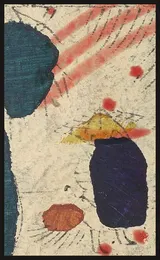
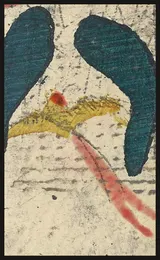
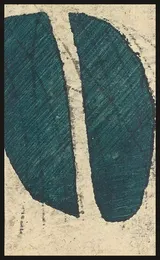
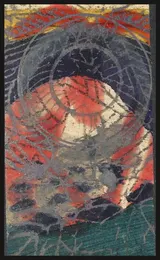
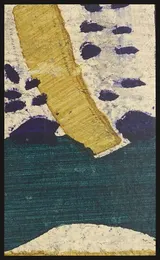
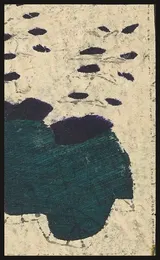
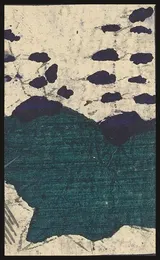
The cards pictured on this page are Japanese: a hand-stencilled hanafuda deck made around 1870, which the Koi-Koi app plays with.
Different games
In Japan the best-known game is Koi-Koi, for two, alongside the older three-player Hana-awase and Hachi-Hachi. In Korea it is Go-Stop, for three, or Matgo for two. Seotda (섯다), a betting game, uses part of the hwatu deck.
| Koi-Koi | Go-Stop (Matgo) | |
|---|---|---|
| Players | 2 | 2 (or 3) |
| Hand | 8 cards | 10 cards (7 with three) |
| Score with | set combinations; plain cards matter little | sets, and plain cards (pi) matter a lot |
| The choice | stop, or call koi-koi | Stop, or call Go |
| Playing on | risks losing the round's points | +1 a Go, doubling from the third; a beaten Go pays double |
| Stealing | none | special plays steal pi |
| Penalties | few | pi-bak, gwang-bak, meong-bak, go-bak |
Can you play one country's game with the other's deck?
Yes. A hanafuda deck plays Go-Stop: count the willow as month 12 and the paulownia as month 11, treat the willow lightning card and one paulownia chaff as double pi, and play without bonus cards. A hwatu deck plays Koi-Koi: set the bonus cards aside, ignore the double-pi marks, and remember that Koi-Koi's November is the rain cards.
Koi-Koi for iPhone and iPad does both on one deck: Koi-Koi in Japanese terms, and Go-Stop with the Korean names in hangul.
Questions
Are hwatu and hanafuda the same cards?
Yes. Both are the same 48-card deck, four cards for each month. Korean hwatu are usually thin plastic with red backs and add marks for brights and double pi, and many packs include bonus cards, but the 48 pictures are the same.
Which month is the rain card?
The willow, or rain, cards are November in Japanese hanafuda and December in Korean hwatu. The paulownia cards are the other way round: December in Japan, November in Korea.
Can I play Go-Stop with a Japanese hanafuda deck?
Yes. Treat the willow lightning card and one paulownia chaff as double pi, play without bonus cards, and swap the order of the last two months if you want to match Korean habits.
What are hwatu bonus cards?
Extra cards in many Korean packs, outside the 48, that are worth extra pi to whoever gets them. Exactly how they work is a house rule. Koi-Koi does not use them.
Does the Koi-Koi app have Go-Stop?
Yes. Koi-Koi for iPhone and iPad plays two-player Go-Stop (Matgo, 맞고) against a computer opponent, with the Korean terms shown in hangul and English, alongside Koi-Koi, Hana-awase and Hachi-Hachi.